CAMAB Women runs four streams of work. They read as separate on a page, and they are not separate in practice. Each one removes a barrier that keeps a blind woman out of a decision being made about her.
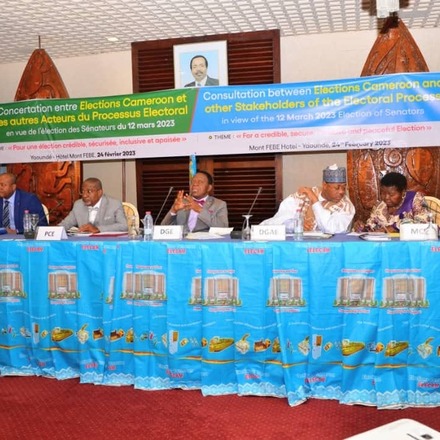
Accessible elections is the oldest stream. CAMAB has been in the room with Cameroon’s electoral body since 2018. In October 2022 its president trained in Ghana on a tactile ballot jacket that lets even a non-literate blind voter mark a ballot alone, and in June 2024 she was elected to lead the national Elections Working Group. The demand has not changed since 2018. A blind woman should be able to vote unaided and in secret, without anyone at the polling station reading her ballot for her.
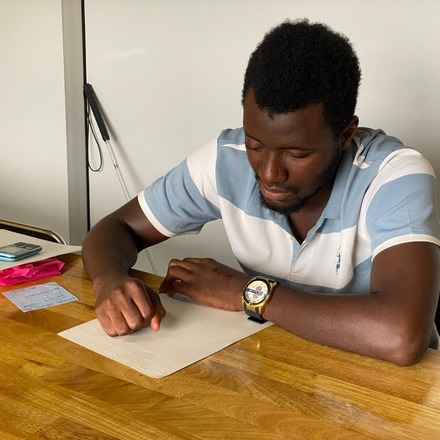
The CAMAB Centre is the newest stream. It opened at Nkolbisson on 7 May 2026, after sustained advocacy with the Yaoundé VII council, and it teaches braille, computer skills, literacy and handicrafts. It exists for a reason CAMAB wrote down long before it had the room. Blind women are harassed in mainstream training centres, and a centre run by women for women takes that risk out of the way while their education continues.
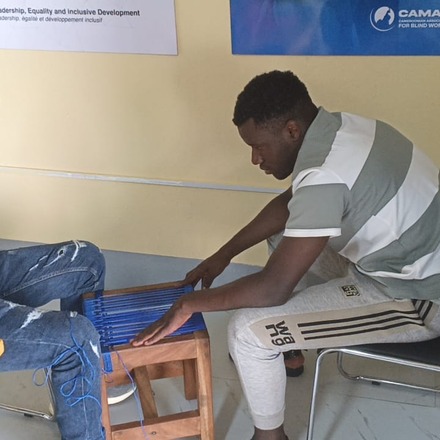
Handicrafts and livelihoods answer the question that follows any qualification. On 5 July 2023, eleven women with visual impairment trained in rope weaving and kernel-oil production at Mile 4 Nkwen in Bamenda. In 2021 and 2022 a half-hectare cassava plot at Eloumdem 2, Mbankomo, brought in thirty bags of 50 kilos. Skills that pay are not a side project here. They are what makes leaving a training centre survivable.
The right to read is the constraint underneath all of it. Cameroon ratified the Marrakesh Treaty on 5 October 2021, and it entered into force here on 5 January 2022. The national copyright law has never been amended to match. Until it is, turning a school textbook into braille still needs the publisher’s permission first.
One argument holds the four together. Nothing about the lives of blind women in Cameroon should be decided, taught, printed or voted on without them. More than 600,000 people in Cameroon live with visual impairment, on the 2014 figure from the Programme national de lutte contre la cécité. Most of them cannot read braille. Very few of those who can are women. CAMAB is run by the people that sentence describes.

 English
  Français