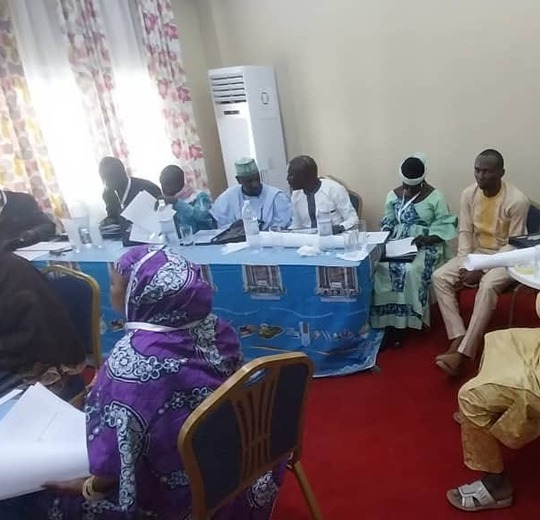
CAMAB’s electoral work began in a room it had been invited into, not one it ran. In 2018 its president attended ELECAM’s Seventh National Consultation Forum, the electoral body’s own stakeholder platform. That is the first dated point in an unbroken record, and it matters that it is dated. This is a standing relationship with the institution that runs Cameroon’s elections, not a campaign got up for one election cycle.
In October 2022 CAMAB went to Ghana to study a system that already worked. Its president trained with the Director of the Ghana Union of the Blind on a tactile ballot jacket, which fits over a ballot paper so that a blind voter can mark it alone, including a voter who cannot read braille. She observed how Ghana runs an inclusive voting process, and met leaders of Ghana’s largest opposition party to ask how disabled members take part in a party’s own internal elections. CAMAB paid for that trip itself.
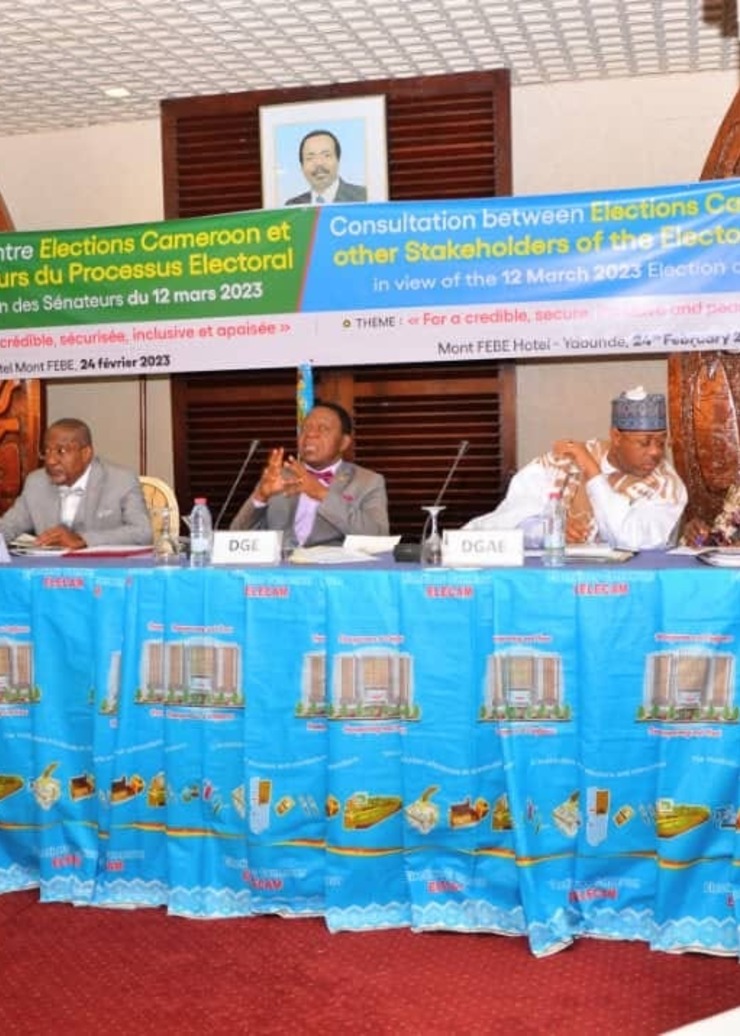
What she brought back went straight into national work. In February 2023 CAMAB took part in ELECAM’s stakeholder consultations before that March’s senatorial election. In June 2024, at Mbalmayo, its president was elected President of the national Elections Working Group. That moved CAMAB from a body that attends consultations to one that convenes them.
In May 2026 the Cameroonian case went to the continent. She represented Cameroon at the Africa Conference on Disability Inclusion in Electoral Processes in the Digital Era, in Dakar. The conference closed with the Appel de Dakar, which calls on governments, electoral commissions, the African Union and development partners to build accessibility into electoral budgets, procurement and digital systems from the start, rather than adding it afterwards. In June 2026 CAMAB was at the restitution workshop at the UNDP conference hall in Yaoundé.
Eight years in, the demand has not moved. Nor has the reason for it. A ballot that somebody else reads aloud is not a secret ballot. Until a blind woman can walk into her polling station and vote unaided, the case CAMAB made in 2018 stands exactly as it was made.
 English
  Français